

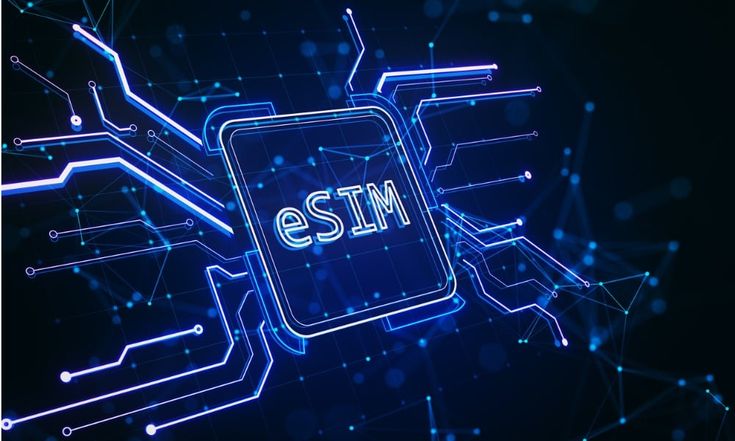
esim –For the past two decades Smartphones have undergone tremendous transformations. From basic call-and-text devices to pocket-sized computers, each innovation has changed the way we communicate and interact with the world. One of the latest—and most disruptive—technological shifts is the rise of the embedded SIM. While traditional SIM cards have served us well, this technology is now beginning to reshape the mobile experience in ways we couldn’t have imagined a few years ago.
What Is an Embedded SIM?
An embedded SIM is a digital SIM embedded directly into your smartphone’s hardware. Unlike a physical SIM card, you don’t need to insert or remove anything. Instead, you can download your mobile plan over the air and switch between carriers or profiles with just a few taps.
Why It’s a Game-Changer
1. Freedom to Switch Carriers Instantly
Gone are the days when changing mobile carriers meant going to a store and swapping SIM cards. With embedded SIM, users can activate a new line, switch carriers, or even use multiple plans at once—all without ever touching a physical card. This is especially helpful when traveling internationally or looking for better deals.
2. Perfect for Frequent Travelers
Embedded SIM makes international travel simpler. Instead of buying a local SIM at your destination, you can download a local carrier profile before or during your trip. You’ll avoid roaming fees while staying connected the moment you land.
3. Dual SIM Convenience
Many smartphones now allow you to run both a physical SIM and an embedded SIM simultaneously. This means you can have one number for personal use and another for work—on the same device. It’s a perfect solution for professionals, entrepreneurs, or anyone who wants to separate different parts of their life.
4. More Secure and Harder to Lose
Physical SIM cards can be stolen or lost. Since an embedded SIM is built into the device, it’s much harder to tamper with or remove. This added layer of security is especially important for users who rely heavily on mobile devices for business or finance.
Impact of Embedded SIM Technology on Mobile Network Connectivity
The rise of embedded SIM technology is not only transforming how consumers interact with their smartphones—it’s also shaking up the mobile network landscape. By removing the limitations of traditional SIM cards, this technology is opening the door to faster, more flexible, and more dynamic mobile connectivity across the globe.
1. Greater Flexibility for Users
One of the most significant advantages of embedded SIM is the ability for users to switch between network providers quickly and easily—often without visiting a store or waiting for a SIM card to arrive. This gives consumers more control over their service:
Switch carriers with a few taps: Users can download new carrier profiles instantly from their phone’s settings.
Take advantage of short-term deals: With this technology, users can jump on promotions or limited-time offers from competing providers without committing long-term.
Avoid roaming charges abroad: Travelers can install a local data plan before they land, staying connected without paying expensive international rates.
This level of flexibility challenges mobile carriers to become more competitive, transparent, and user-centric.
2. Streamlined Connectivity for IoT and Wearables
Embedded SIM is a game-changer for the Internet of Things (IoT) and wearable tech. Devices like smartwatches, fitness trackers, health monitors, and connected vehicles can now connect to mobile networks without the need for bulky SIM trays.
Smaller, sleeker designs: This technology allows manufacturers to make thinner and more compact devices.
Always-connected smartwatches: Wearables with embedded SIM can operate independently of smartphones, which is especially valuable for athletes, kids, or elderly users.
IoT scalability: Embedded SIMs simplify the logistics of deploying thousands of connected devices (e.g., sensors, delivery drones, security systems) by enabling remote provisioning and management.
3. Enhanced Network Efficiency and Provisioning
For mobile operators, embedded SIM technology can drastically reduce physical logistics and support costs:
No more physical distribution: Carriers no longer need to ship SIM cards or maintain inventory.
Remote provisioning: Subscribers can activate plans remotely, reducing the need for in-store support and enabling quicker onboarding.
Network agility: This technology allows for faster rollouts of new plans, especially in emerging markets or under-served areas where physical infrastructure is limited.
This digital-first approach also aligns with 5G network expansion, as embedded SIM makes it easier for users to upgrade to 5G plans or devices on demand.
4. Better Security and Fraud Protection
Embedded SIM technology introduces new opportunities for improved security and fraud prevention:
Harder to tamper with: Since the SIM is embedded in the device, it’s more difficult for thieves to swap it out, which can help reduce identity theft or phone-related fraud.
Encrypted provisioning: Activation typically involves encrypted communication between the carrier and the device, adding another layer of protection.
Remote locking: In case of theft or loss, devices with embedded SIM can be remotely locked or disconnected from the network—something that’s more difficult with traditional SIM cards.
5. More Dynamic Multi-Network Support
With embedded SIM, smartphones and other connected devices can easily store multiple profiles from different carriers:
Dual or multi-network use: Users can have one network for voice and another for data, or use separate lines for personal and business use.
Automatic switching: Future advancements may allow devices to automatically switch between networks based on signal strength or pricing, optimizing connectivity in real time.
Resilience during outages: Having backup carrier profiles available on a single device increases network resilience in areas prone to outages or limited coverage.
Implementation of Embedded SIM by Smartphone Manufacturers
As this technology gains momentum, major smartphone manufacturers have started integrating it into their flagship devices—and even phasing out traditional SIM slots altogether. This shift not only reflects a commitment to innovation but also pushes the industry toward a more flexible and streamlined mobile experience.
Apple: Leading the Charge
Apple has been one of the earliest adopters of embedded SIM technology. Starting with the iPhone XS, XR, and XS Max in 2018, Apple introduced dual SIM functionality by combining a physical SIM and an embedded SIM. Since then, every new iPhone model has supported this technology.
In 2022, Apple took a bold step by launching the iPhone 14 series in the U.S. with no physical SIM tray at all, making it the first major smartphone line to go embedded SIM-only in a major market. This move signaled Apple’s confidence in the technology and encouraged carriers worldwide to step up their embedded SIM support.
Apple has also implemented this technology in other devices, such as the iPad Pro, Apple Watch, and some MacBooks with cellular capabilities, reinforcing its ecosystem-wide integration.
Samsung: A Balanced Approach
Samsung began incorporating embedded SIM functionality in its premium devices, starting with models like the Galaxy S20, Note 20, and Z Flip series. Many of its recent foldables and Galaxy S models now support dual SIM options (one physical + one embedded SIM), giving users more flexibility.
While Samsung hasn’t yet eliminated the SIM tray like Apple, it’s gradually expanding embedded SIM support across more regions and models, particularly in its flagship and foldable lines. Samsung smartwatches, like the Galaxy Watch series, also support this technology, appealing to fitness enthusiasts and professionals alike.
Google: Embracing Embedded SIM Across Devices
Google has been quietly but consistently integrating embedded SIM into its Pixel phones. Starting with the Pixel 2, Google has built this capability into each new Pixel model, and its Pixel 7 and Pixel 8 series offer seamless switching and support for multiple profiles.
With Android 13 and beyond, Google has also improved the OS-level support for managing embedded SIMs, enabling features like Multiple Enabled Profiles (MEP)—which will allow users to have multiple active lines simultaneously without needing physical SIMs at all.
Other Brands: Slowly Catching Up
Brands like Motorola, OnePlus, Xiaomi, and Oppo are beginning to roll out embedded SIM support in select models, though adoption is not yet widespread. These companies tend to follow trends established by Apple, Samsung, and Google, so we can expect broader implementation in the coming years.
Smartwatches and Beyond
Embedded SIM isn’t just limited to smartphones. Wearables like the Apple Watch, Samsung Galaxy Watch, and Google Pixel Watch use this technology to offer standalone connectivity—letting users make calls, send messages, or stream music without needing to carry their phone.
Tablets like the iPad Pro, Samsung Galaxy Tab, and even some Windows laptops now feature this support for data connectivity on the go.
Challenges of Integration
The integration of embedded SIM technology represents a significant shift in how mobile connectivity is managed, offering enhanced flexibility and efficiency over traditional SIM cards. However, the adoption and integration of this technology also come with a variety of challenges across technical, commercial, and regulatory domains. Below are some of the key challenges:
- Device Compatibility
Not all devices are currently equipped to support embedded SIMs. While newer smartphones, tablets, and wearables increasingly include support, many older or budget models rely exclusively on physical SIM cards. This lack of universal compatibility limits the scalability of these services, especially in emerging markets where older devices are more prevalent. - Carrier Readiness and Support
Adoption depends heavily on mobile network operators (MNOs) being equipped with the necessary infrastructure to manage embedded SIM profiles. Many carriers, particularly in developing regions, still lack the backend systems for remote provisioning and profile management. This leads to inconsistent user experiences and limited availability. - Security Concerns
While embedded SIMs can be more secure than physical SIMs (due to reduced risk of physical theft or swapping), they also introduce new digital vulnerabilities. Secure provisioning over-the-air (OTA), profile management, and ensuring end-to-end encryption are critical challenges, especially when dealing with multiple carriers and devices. - User Experience and Transition
Switching from physical SIMs to embedded SIMs can be confusing for users unfamiliar with digital provisioning. Setting up typically involves scanning QR codes, entering activation codes, or using carrier apps, which may not be user-friendly for all demographics. Furthermore, moving profiles between devices is not always straightforward, unlike simply swapping a physical SIM. - Regulatory and Legal Barriers
In some countries, regulatory bodies have been slow to approve or develop standards for this technology. Concerns around security, surveillance, and number portability may delay rollouts or limit functionality. Legal frameworks must evolve to support the digital provisioning and ownership of mobile numbers via embedded SIM. - Limited Multi-Carrier Support
One of the advantages of this technology is the ability to switch between carriers easily. However, in practice, carriers may lock profiles to discourage switching, or limit access to features to postpaid users only. This undermines the core value proposition of flexibility and freedom for consumers. - Cost and Complexity for OEMs
Original equipment manufacturers (OEMs) face higher initial costs in integrating embedded SIM hardware and software into their devices. Additionally, ensuring compliance with GSMA standards and coordinating with multiple carriers adds to development complexity, especially for small or mid-sized manufacturers. - Roaming and Cross-Border Usage
Embedded SIMs have the potential to simplify roaming and international connectivity, but the lack of standardized global support limits this. Some carriers may not support activation for roaming profiles, while others may impose additional restrictions, complicating use for frequent travelers.
Conclusion
This technology marks a major advancement in mobile connectivity, offering greater flexibility, convenience, and potential for innovation across various industries. By enabling remote provisioning and eliminating the need for physical SIM cards, embedded SIMs simplify device management, especially in smartphones, IoT devices, and wearables. However, widespread adoption still faces hurdles, including limited device and carrier support, security concerns, regulatory constraints, and user adaptation challenges. As infrastructure matures and global standards evolve, embedded SIMs are poised to become a core component of digital connectivity, transforming how consumers and businesses interact with mobile networks.
What Do you Thing Read more Blogs here
Leave a Comment
Your email address will not be published. Required fields are marked *